
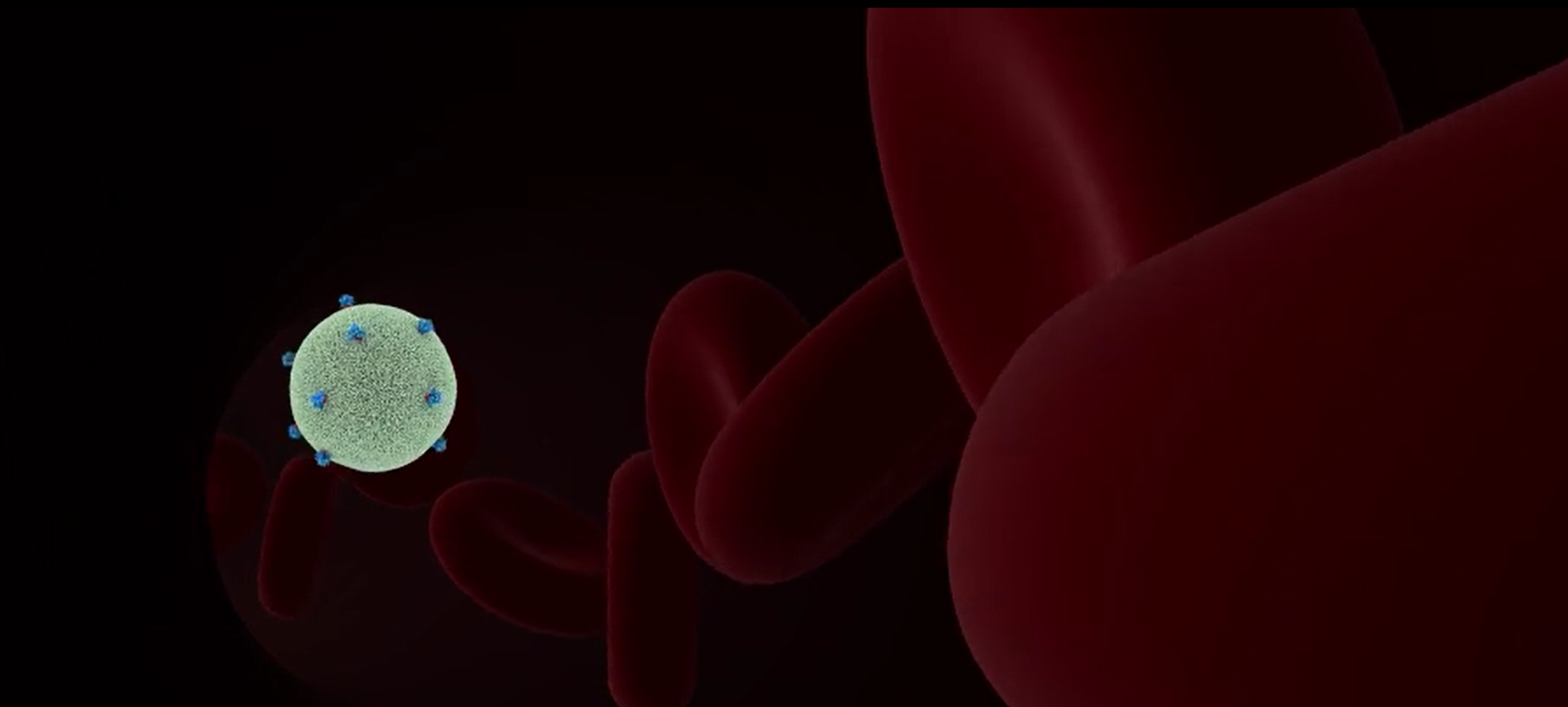
The Discovery of HIV
Human immunodeficiency virus (HIV) was first recognized in 1981, when doctors in Los Angeles reported a deadly disease called Pneumocystis carinii pneumonia (PCP) in five previously healthy young men (CDC, 1981). These cases revealed a profound and unexplained loss of immune function, which would soon become known as AIDS (acquired immunodeficiency syndrome). Two years later, Dr. Françoise Barré-Sinoussi and her colleagues at the Institut Pasteur isolated a previously unknown retrovirus from a patient with persistent lymphadenopathy (Barré-Sinoussi et al., 1983). This virus was eventually identified as the cause of AIDS and named human immunodeficiency virus.
The Evolution of HIV
Long before HIV was recognized, the ancestor of pandemic HIV-1 was already spreading among people in Central Africa (Worobey et al., 2008; Faria et al., 2014). Molecular-clock analyses indicate that the pandemic lineage, HIV-1 group M, began diversifying in Central Africa around the early 20th century, with Kinshasa emerging as an important center of its early spread (Worobey et al., 2008; Faria et al., 2014).
The origin of HIV can be traced to multiple cross-species transmission events involving simian immunodeficiency viruses (SIVs) that have circulated among African primates for millions of years (Compton et al., 2013). Different African primate species carry their own strains of SIV, and these viruses crossed from primates into humans on several occasions. These independent transmission events gave rise to the two major types of HIV we have identified today, known as HIV-1 and HIV-2.
HIV-1 can be further divided into four groups: M, N, O, and P. Of these, group M is by far the most widespread and is responsible for the global HIV pandemic. Its closest relatives are SIVs found in chimpanzees in Central Africa (Keele et al., 2006; Sharp & Hahn, 2011). Chimpanzees likely acquired SIV from the monkeys they hunted and ate. Over time, different monkey viruses combined and evolved into a chimpanzee virus known as SIVcpz. SIVcpz later crossed from chimpanzees into humans on several separate occasions. One of these spillovers gave rise to HIV-1 group M, the cause of the global pandemic.
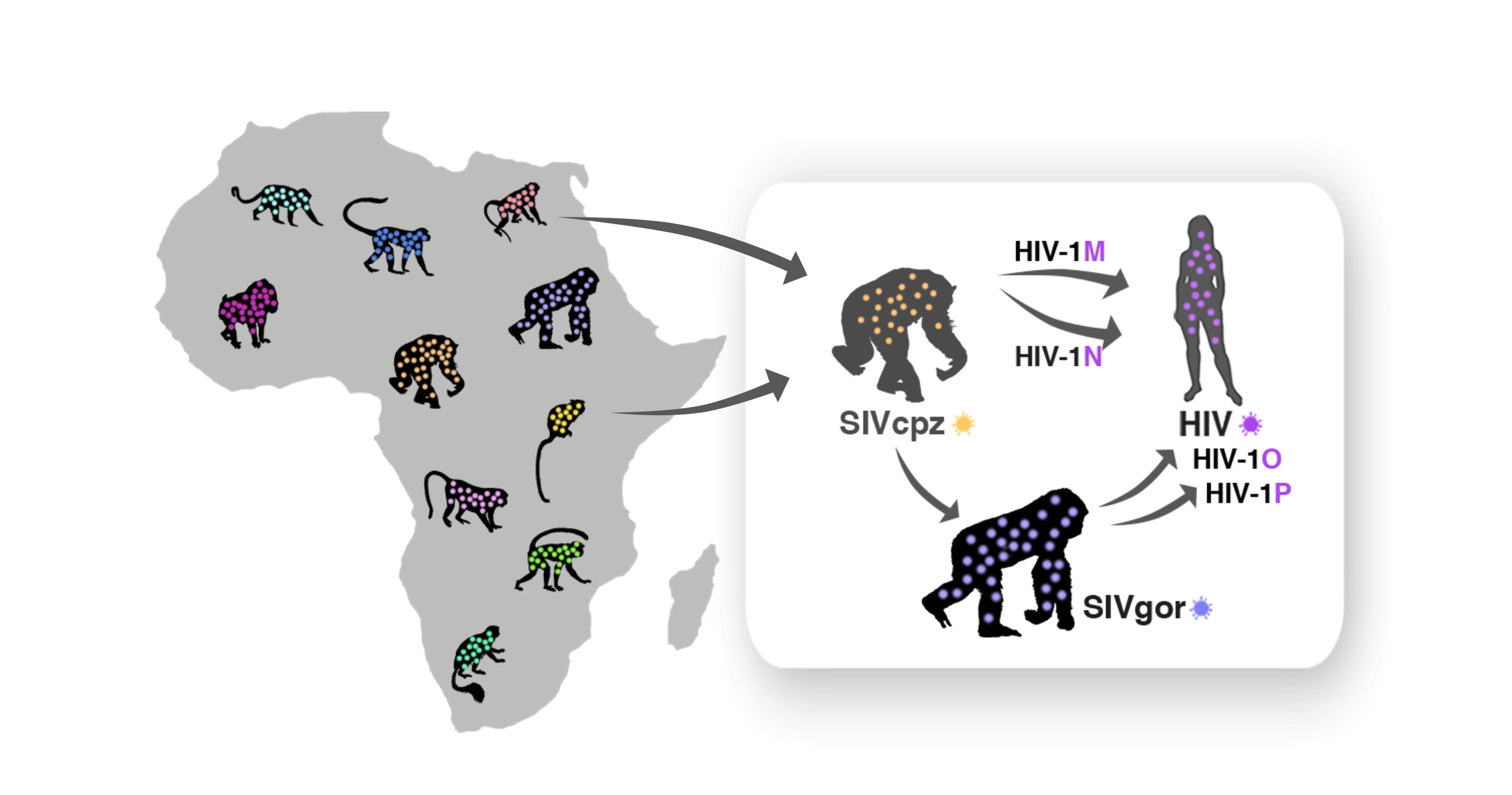
Fig 1. Origin of HIV-1 groups.
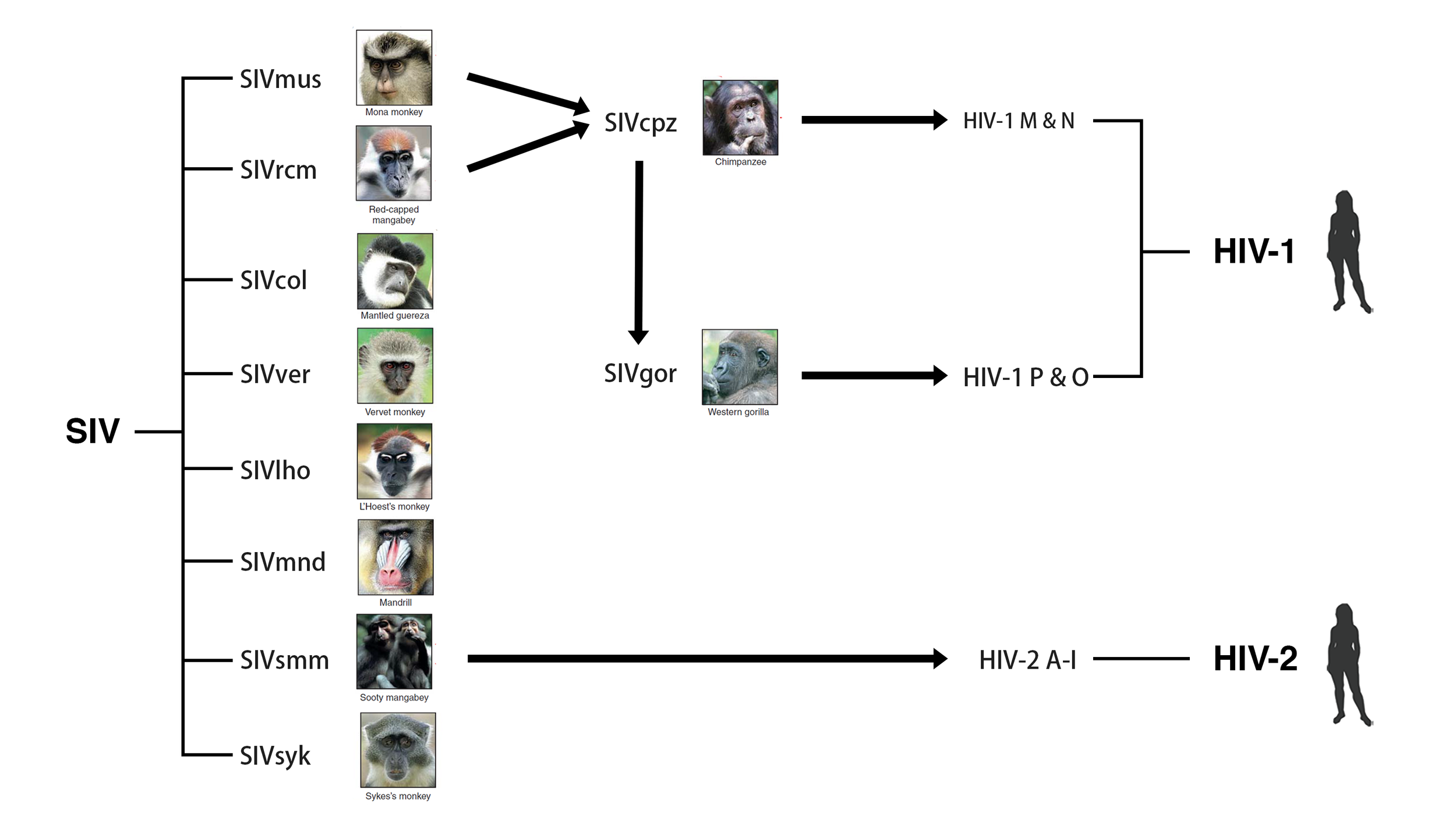
Fig 2. Origin of HIV-1 and HIV-2 viruses (adapted from Sharp & Hahn, 2011 and Peeters et al., 2024).
Why did some SIVs become HIV, while others didn’t?
Much like HIV, SIVcpz also have different varieties. Of the four recognized chimpanzee subspecies, only the central and eastern subspecies harbor SIVcpz viruses, but only the SIVcpz viruses from central chimpanzees has served as a source of cross-species transmission to both gorillas and humans. (Gao et al., 1999; Keele et al., 2006). This raises an intriguing question: why were some chimpanzee viruses able to cross the species barrier while others were not?
Part of the answer may lie in the natural defenses inside our cells. Humans produce antiviral proteins that can stop an animal virus from successfully infecting or spreading in human cells. Scientists call these proteins “restriction factors,” and examples include APOBEC3 proteins, TRIM5α, and tetherin (Sauter et al., 2010). For example, human tetherin posed a major barrier to SIVcpz, but pandemic HIV-1 has evolved a way to counteract it using a viral protein called Vpu (Sharp & Hahn, 2011).
Scientists are still looking for other human proteins that may restrict SIVcpz to help us understand why only certain types of SIVcpz successfully crossed into humans. A recent study has shown that the human protein cyclophilin A (CypA) strongly restricts eastern SIVcpz replication but has little effect on central SIVcpz (Young et al., 2026). This difference may explain why only the central SIVcpz gave rise to HIV-1, although the underlying molecular mechanisms still require further investigation.
References
Centers for Disease Control (CDC). (1981). Pneumocystis pneumonia — Los Angeles. Morbidity and Mortality Weekly Report, 30(21), 250–252.
Barré-Sinoussi, F., et al. (1983). Isolation of a T-lymphotropic retrovirus from a patient at risk for acquired immune deficiency syndrome (AIDS). Science, 220(4599), 868–871.
Worobey, M., et al. (2008). Direct evidence of extensive diversity of HIV-1 in Kinshasa by 1960. Nature, 455, 661–664.
Faria, N. R., et al. (2014). The early spread and epidemic ignition of HIV-1 in human populations. Science, 346(6205), 56–61.
Compton, A. A., Malik, H. S., & Emerman, M. (2013). Host gene evolution traces the evolutionary history of ancient primate lentiviruses. Philosophical Transactions of the Royal Society B, 368(1626), 20120496.
Keele, B. F., et al. (2006). Chimpanzee reservoirs of pandemic and nonpandemic HIV-1. Science, 313(5786), 523–526.
Sharp, P. M., & Hahn, B. H. (2011). Origins of HIV and the AIDS pandemic. Cold Spring Harbor Perspectives in Medicine, 1(1), a006841.
Hahn, B. H., Shaw, G. M., De Cock, K. M., & Sharp, P. M. (2000). AIDS as a zoonosis: Scientific and public health implications. Science, 287(5453), 607–614.
Locatelli, S., & Peeters, M. (2012). Cross-species transmission of simian retroviruses: How and why they could lead to the emergence of new diseases in the human population. AIDS, 26(6), 659–673.
Gao, F., et al. (1999). Origin of HIV-1 in the chimpanzee Pan troglodytes troglodytes. Nature, 397, 436–441.
Sauter, D., Specht, A., & Kirchhoff, F. (2010). Tetherin: Holding on and letting go. Cell, 141(3), 392–398.
Peeters, M., D’arc, M., Etienne, L., Delaporte, E., & Ayouba, A. (2024). Origin and emergence of HIV/AIDS. In M. Tibayrenc (Ed.), Genetics and Evolution of Infectious Diseases (3rd ed., pp. 811–839). Elsevier.
Young, M. J., Cotera, F., Gill, C. C. C., Lewis, J. A., Whitby, F. G., Abdellatif, A., Rocha, J. L., Singer, M., Nalls, M. A., Faghri, F., Sudmant, P. H., Pornillos, O., & Ohainle, M. (2026). CypA is a molecular barrier to HIV emergence from Eastern chimpanzees. bioRxiv.
SIVcpz also crossed from chimpanzees into gorillas, where it became a closely related virus called SIVgor. Viruses from gorillas later crossed into humans and gave rise to HIV-1 groups O and P (Sharp & Hahn, 2011; Peeters et al., 2024). Therefore, HIV-1 emerged through multiple independent cross-species transmissions, and only one of its lineages, HIV-1 group M, went on to spread around the world. Although it is difficult to determine how the first transmission happened, these cross-species transmissions likely occurred through exposure to infected blood during the hunting or butchering of primates.
A distinct lineage, HIV-2, arose independently from SIVsmm infecting sooty mangabeys in West Africa (Hahn et al., 2000; Sharp & Hahn, 2011). HIV-2 is classified into nine major groups, A through I, each of which represents an independent cross-species transmission from sooty mangabeys to humans. However, only a small number of these events led to sustained human-to-human transmission (Sharp & Hahn, 2011; Locatelli & Peeters, 2012).